
Introduction
Sensory bottles are a fun, engaging, and affordable way to encourage babies and toddlers to explore the world around them. They provide children with opportunities to discover colours, movement, textures, and sounds while supporting important developmental skills through hands-on play.
Whether you’re a parent, caregiver, or early childhood educator, sensory bottles are easy to make and can be adapted to match any learning theme, season, or holiday. In this post, I’ll share creative sensory bottle ideas, learning objectives, developmental benefits, supplies you’ll need, and important safety tips.


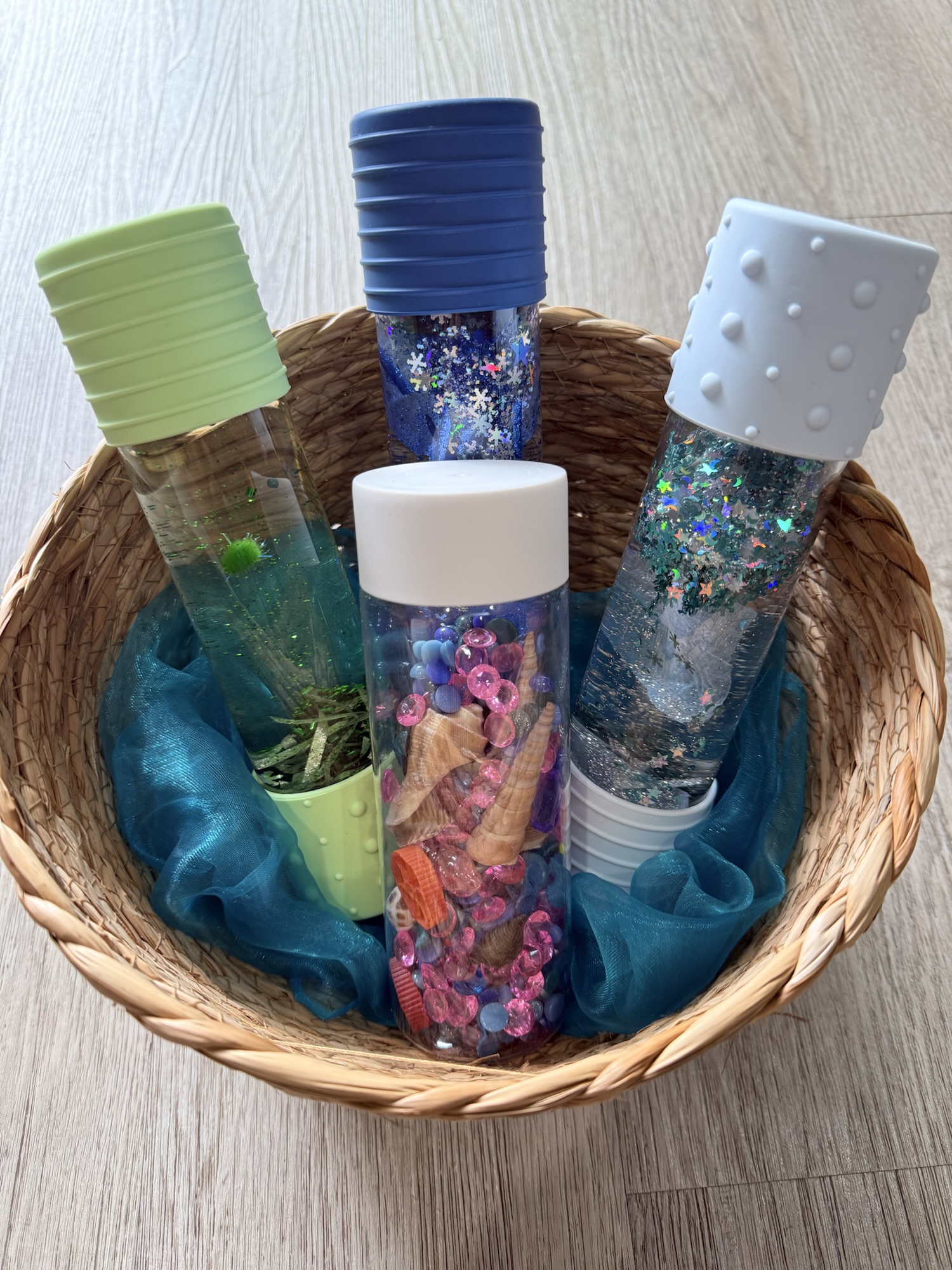
A collection of colourful sensory bottles created using a variety of simple materials. Each bottle offers a unique sensory experience and can be adapted to suit different learning themes and children’s interests.
🌟 Learning Objectives
- Develop visual tracking skills.
- Strengthen fine motor skills through grasping and shaking.
- Explore colours, textures, and movement.
- Learn about cause and effect.
- Build concentration and attention.
- Encourage curiosity and exploration.
- Support language development through conversations.
- Promote self-regulation with calming sensory experiences.
- Encourage independent play.
🌈 Developmental Benefits
Sensory bottles support many areas of development, including:
- 🧠 Cognitive Development
- 🤲 Fine Motor Skills
- 👀 Visual Tracking
- 💬 Language Development
- ❤️ Social-Emotional Development
- 🌟 Sensory Exploration

Sensory bottles encourage children to observe, investigate, and explore different materials while supporting early learning through play.
🛒 Materials You Can Use
One of the best things about sensory bottles is that you can create them using inexpensive or recycled materials. Some popular fillers include:
- Glitter
- Sequins
- Pom-poms
- Buttons
- Colourful beads
- Foam beads
- Small rocks or pebbles
- Clean beach sand or craft sand
- Seashells
- Rice
- Pasta
- Dried beans or lentils
- Feathers
- Gems
- Small plastic animals
- Mini dinosaurs
- Ocean-themed figures
- Water
- Food colouring
- Clear glue or glycerin (to slow the movement)
You can mix and match materials to create unique sensory bottles that fit your learning theme.
♻️ Choosing the Right Bottle
You don’t need to buy special sensory bottles. You can reuse clean, clear plastic bottles from around your home, including:
- Water bottles
- Soft drink bottles
- Juice bottles
- Smoothie bottles
- Other clear plastic bottles with secure lids
Recycling bottles is an affordable and environmentally friendly way to create sensory play experiences.

🛍️ Where to Buy Supplies
Most sensory bottle materials are inexpensive and easy to find. You can purchase supplies from:
- Dollar Tree
- Dollarama
- Amazon
- SHEIN
- Temu
- AliExpress
- Local craft stores
Choose materials that match your learning theme, such as oceans, nature, transportation, construction, dinosaurs, colours, seasons, or holidays. There are endless possibilities, so have fun getting creative!

💡 Tips for Creating Sensory Bottles
- Choose a clear bottle so children can easily see the contents.
- Don’t overfill the bottle; leave space for the materials to move.
- Experiment with different colours, textures, and fillers.
- Match your sensory bottle to your classroom theme or your child’s interests.
- Make sure the lid is tightly sealed before use.
🔒 Safety Tips
- Always supervise children while using sensory bottles.
- Secure the lid with strong glue or another child-safe sealant.
- Regularly check bottles for leaks or cracks.
- Use age-appropriate materials.
- Replace damaged bottles immediately

Every sensory bottle is unique. Use your imagination, recycle everyday bottles, and choose materials that inspire children to explore, discover, and learn through play.
💙 Final Thoughts
Sensory bottles are a simple, affordable, and engaging way to support early childhood learning through play. They encourage curiosity, creativity, and exploration while helping children develop important cognitive, physical, language, and social-emotional skills. Whether you create them using recycled bottles or store-bought containers, sensory bottles can be adapted to suit any theme and provide meaningful learning opportunities for babies and toddlers.
 Little Hands Learning