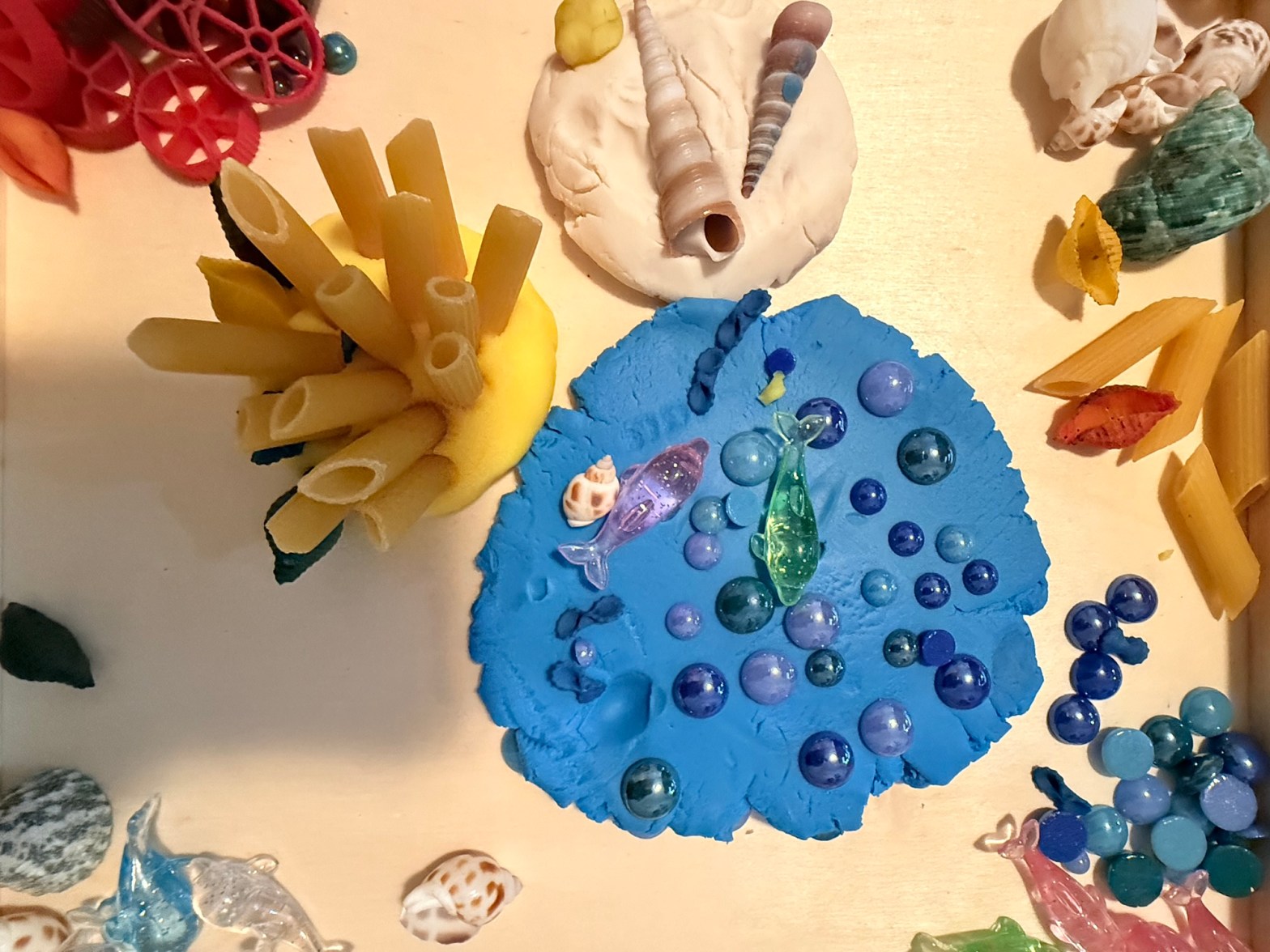
The ocean is full of fascinating creatures, beautiful shells, and endless opportunities for exploration. This Ocean Playdough Invitation brings those wonders into a hands-on learning experience through open-ended sensory play.
Children are invited to roll, squeeze, flatten, stamp, and decorate playdough while exploring realistic sea animals, textured shells, and colourful loose parts. As they create their own underwater world, they naturally develop fine motor skills, creativity, and curiosity through play.
Whether used in an early learning classroom, childcare setting, homeschool environment, or at home, this invitation provides meaningful learning experiences while encouraging imagination and independent exploration.
Materials

- Coloured playdough (red, blue, and yellow)
- Sea animal figurines
- Assorted seashells
- Rolling pin
- Ocean-themed loose parts (glass gems, acrylic pieces, pasta, stones)
- Wooden tray or basket
- Play mat or work surface
Setting Up the Invitation
Arrange the sea animals in a basket where children can easily access them. Display shells and ocean-themed loose parts in a separate tray to encourage independent exploration. Place the colourful playdough on a work mat along with a rolling pin, creating an inviting space that encourages curiosity and creativity.
Keeping materials organized allows children to make their own choices while exploring the invitation at their own pace.

Exploring Through Play
Children naturally began pressing sea animals into the playdough, creating detailed imprints and discovering the unique textures of each figure. They experimented with rolling, flattening, and squeezing the dough before decorating it with shells and ocean treasures.
Throughout the activity, children explored cause and effect as they observed how different objects created different patterns and impressions. Their play evolved into imaginative storytelling as they created underwater habitats for sea creatures.


Learning Opportunities
This invitation encourages children to:
- Strengthen fine motor muscles through rolling, squeezing, and pressing
- Develop hand-eye coordination
- Explore different textures, shapes, and patterns
- Build creativity through open-ended play
- Expand language by discussing sea animals and ocean habitats
- Practice problem-solving and independent thinking
- Develop sensory awareness through hands-on exploration.


Questions to Encourage Thinking
While children explore, you might ask:
- Which sea creature would you like to play with first?
- What happens when you press a shell into the playdough?
- Which shell makes your favourite pattern?
- Can you make an underwater home for your sea animals?
- What colours remind you of the ocean?
- How do the different shells feel?
Developmental Benefits
This invitation supports:
- Fine Motor Development
- Sensory Exploration
- Creativity and Imagination
- Language and Communication
- Cognitive Development
- Early Science Exploration
- Problem Solving
- Independent Decision Making


Why We Love This Invitation
Open-ended invitations encourage children to follow their own interests while building important developmental skills through play. There is no right or wrong way to explore, making each experience unique and meaningful.
Simple materials such as playdough, shells, and sea animals become powerful learning tools that inspire creativity, curiosity, and joyful discovery.


Safety Reminder
Adult supervision is recommended throughout this activity. Small loose parts such as shells, gems, pasta, and miniature sea animals may present a choking hazard for young children. Always choose materials that are appropriate for the age and developmental stage of the children participating.
 Little Hands Learning