5 Easy Construction Week Activities for Toddlers

Hands-on sensory play, process art, and building ideas little builders will love.

If you’re planning a construction week for toddlers, these five hands-on activities are simple to set up and packed with opportunities for learning through play. Using everyday materials like toy trucks, building blocks, paint, and sensory items, toddlers can explore, create, build, and discover at their own pace.

As an early childhood educator, I love creating engaging invitations to play that encourage curiosity, creativity, and meaningful learning. These construction-themed activities are perfect for daycare classrooms, home daycares, or families looking for fun, screen-free learning at home.

From sensory play and process art to water play and block building, each activity supports important developmental skills while keeping little builders engaged through hands-on exploration.


🚧 1. Construction Site Sensory Bin

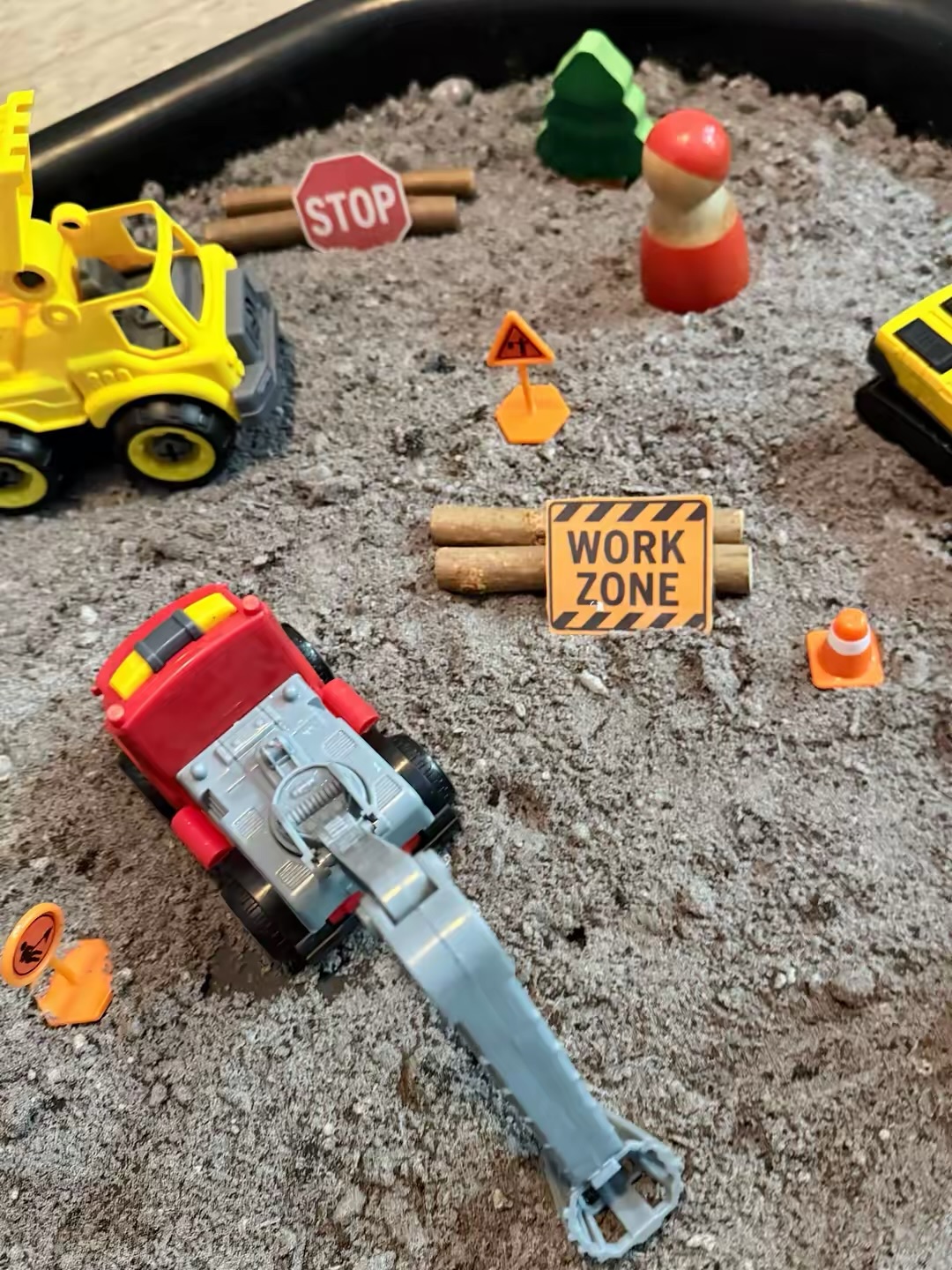
Create a construction-themed sensory bin using toy construction vehicles, wooden logs, road signs, and a taste-safe sensory base. This open-ended invitation encourages toddlers to dig, scoop, fill, dump, and explore while using their imagination. Sensory play helps toddlers discover different textures and builds confidence through hands-on learning.

Learning Benefits

  • Sensory exploration
  • Fine motor development
  • Hand-eye coordination
  • Imaginative play
  • Problem-solving

🚜 2. Fill & Dump Construction Invitation

Toddlers love loading, transporting, and dumping materials. Set out dump trucks with loose sensory materials and let them explore at their own pace. Repeating these simple actions helps strengthen coordination while introducing early concepts like full, empty, heavy, and light.

Learning Benefits

  • Fine motor skills
  • Cause and effect
  • Hand-eye coordination
  • Language development
  • Independent exploration

🧽 3. Construction Truck Wash

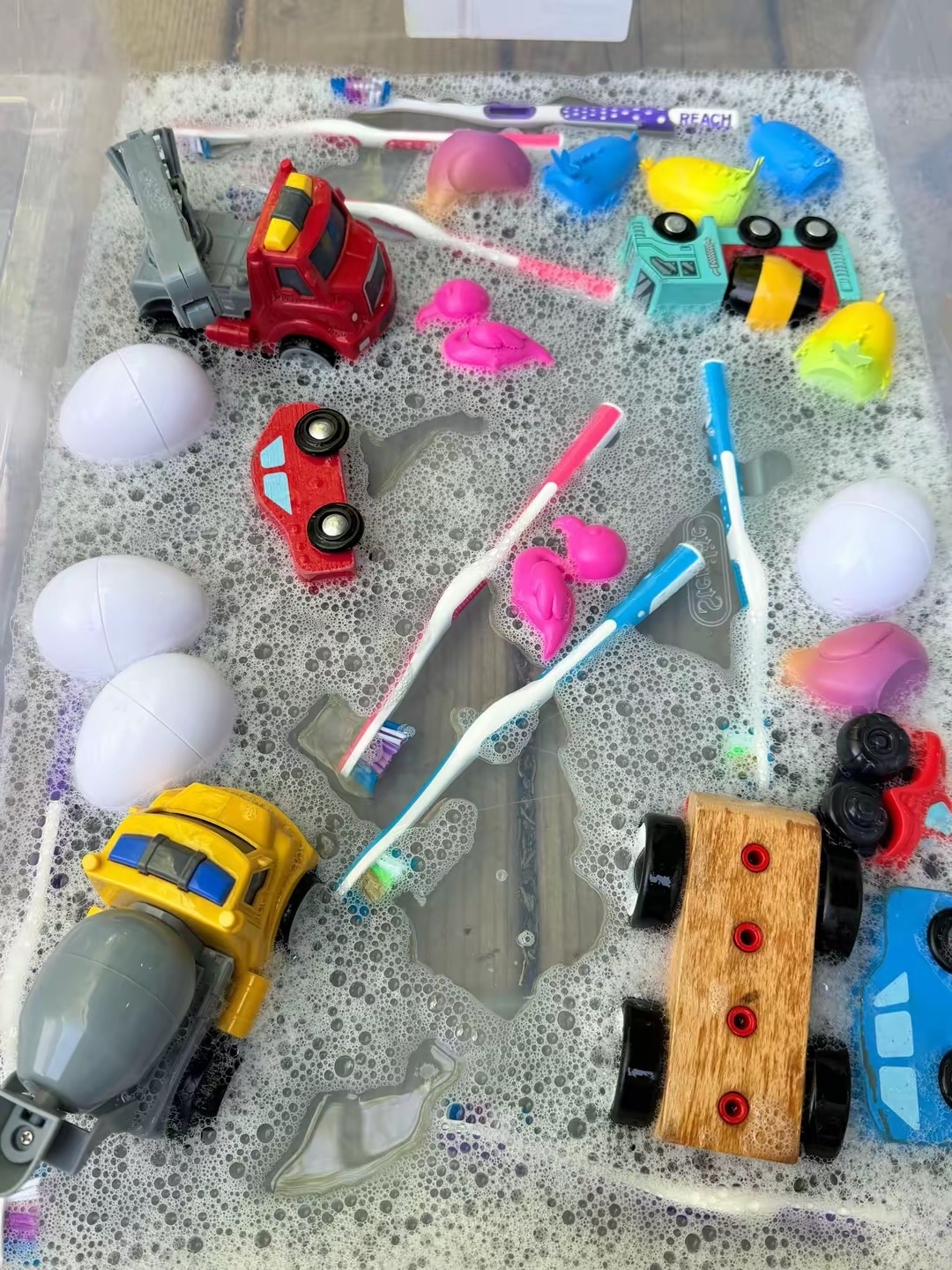
Create a simple truck wash using warm soapy water, sponges, toothbrushes, and toy construction vehicles. Toddlers will enjoy scrubbing, rinsing, and splashing while pretending to clean their trucks after a busy day at the construction site.

Learning Benefits

  • Sensory play
  • Fine motor development
  • Hand strength
  • Practical life skills
  • Imaginative play

🎨 4. Construction Truck Process Art

Turn toy construction vehicles into painting tools by rolling them through washable paint and across large sheets of paper. As toddlers push and drive the trucks, they create colorful tracks and unique artwork while exploring movement, creativity, and cause and effect.

Learning Benefits

  • Creative expression
  • Process art
  • Hand-eye coordination
  • Sensory exploration
  • Fine motor development

🧱 5. Building Block Exploration

Invite toddlers to stack, balance, connect, and knock down large building blocks. Block play encourages children to experiment, solve simple problems, and build confidence as they create their own towers, roads, and structures.

Learning Benefits

  • Fine motor development
  • Spatial awareness
  • Problem-solving
  • Creativity
  • Early STEM skills

Final Thoughts

Construction week is a wonderful way to inspire curiosity, creativity, and hands-on learning. With just a few simple materials, toddlers can explore, build, paint, wash, and imagine while developing important skills through play.

The best part is that these activities don’t require expensive supplies or complicated setups. Simple, open-ended invitations often create the most meaningful learning experiences and allow children to explore at their own pace.

I hope these five construction-themed activities inspire your next lesson plan or play session. If you try any of these ideas, I’d love to hear how they went!

Looking for more toddler activity ideas? Be sure to explore the rest of Little Hands Learning for sensory play, process art, seasonal themes, and easy learning invitations designed to make play meaningful and fun.

Happy learning and happy building! 🚜🦺💛
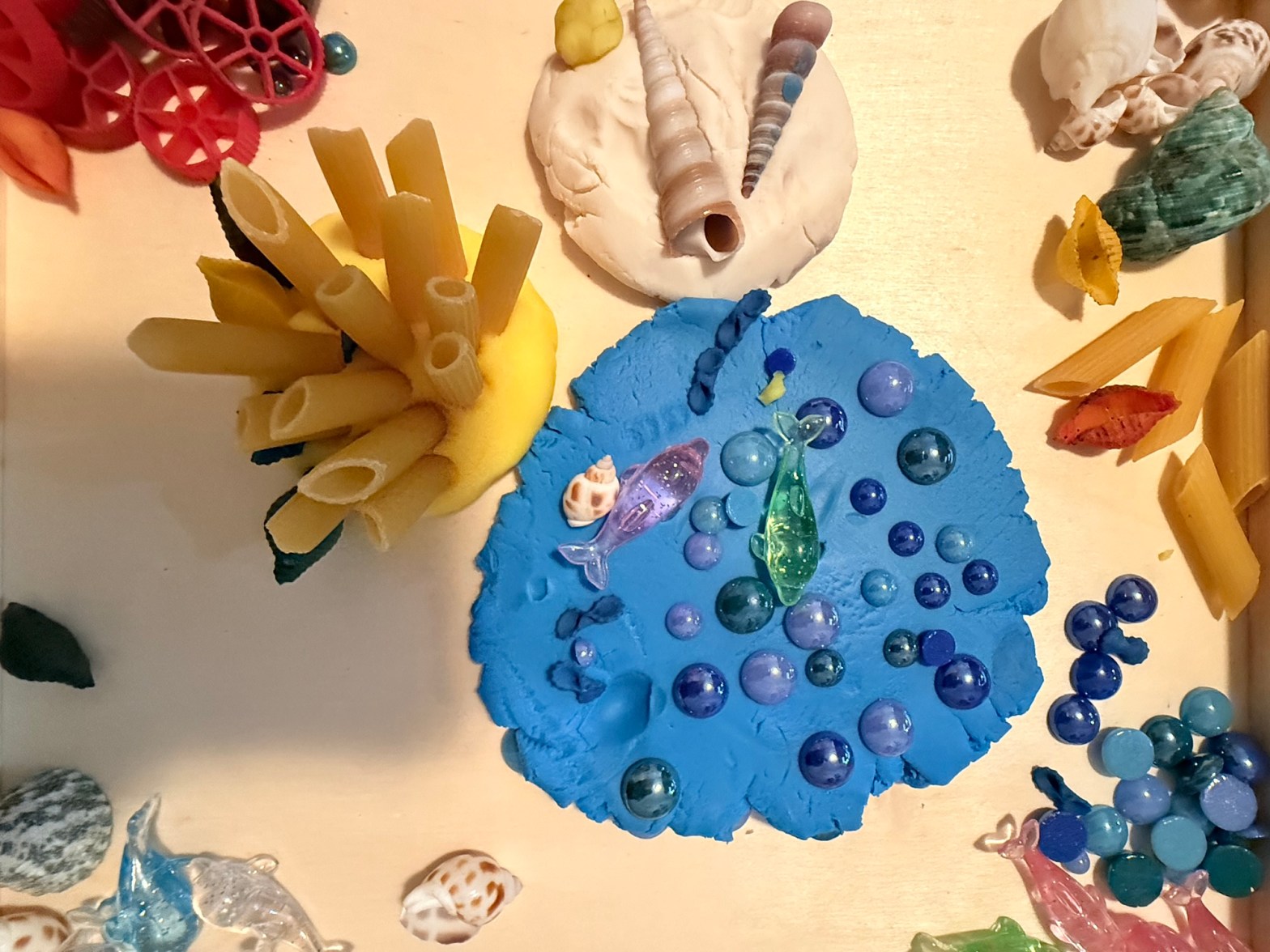
Ocean Playdough Invitation: A Creative Sensory Experience

The ocean is full of fascinating creatures, beautiful shells, and endless opportunities for exploration. This Ocean Playdough Invitation brings those wonders into a hands-on learning experience through open-ended sensory play.

Children are invited to roll, squeeze, flatten, stamp, and decorate playdough while exploring realistic sea animals, textured shells, and colourful loose parts. As they create their own underwater world, they naturally develop fine motor skills, creativity, and curiosity through play.

Whether used in an early learning classroom, childcare setting, homeschool environment, or at home, this invitation provides meaningful learning experiences while encouraging imagination and independent exploration.

Materials

  • Coloured playdough (red, blue, and yellow)
  • Sea animal figurines
  • Assorted seashells
  • Rolling pin
  • Ocean-themed loose parts (glass gems, acrylic pieces, pasta, stones)
  • Wooden tray or basket
  • Play mat or work surface

Setting Up the Invitation

Arrange the sea animals in a basket where children can easily access them. Display shells and ocean-themed loose parts in a separate tray to encourage independent exploration. Place the colourful playdough on a work mat along with a rolling pin, creating an inviting space that encourages curiosity and creativity.

Keeping materials organized allows children to make their own choices while exploring the invitation at their own pace.

Exploring Through Play

Children naturally began pressing sea animals into the playdough, creating detailed imprints and discovering the unique textures of each figure. They experimented with rolling, flattening, and squeezing the dough before decorating it with shells and ocean treasures.

Throughout the activity, children explored cause and effect as they observed how different objects created different patterns and impressions. Their play evolved into imaginative storytelling as they created underwater habitats for sea creatures.

Learning Opportunities

This invitation encourages children to:

  • Strengthen fine motor muscles through rolling, squeezing, and pressing
  • Develop hand-eye coordination
  • Explore different textures, shapes, and patterns
  • Build creativity through open-ended play
  • Expand language by discussing sea animals and ocean habitats
  • Practice problem-solving and independent thinking
  • Develop sensory awareness through hands-on exploration.

Questions to Encourage Thinking

While children explore, you might ask:

  • Which sea creature would you like to play with first?
  • What happens when you press a shell into the playdough?
  • Which shell makes your favourite pattern?
  • Can you make an underwater home for your sea animals?
  • What colours remind you of the ocean?
  • How do the different shells feel?

Developmental Benefits

This invitation supports:

  • Fine Motor Development
  • Sensory Exploration
  • Creativity and Imagination
  • Language and Communication
  • Cognitive Development
  • Early Science Exploration
  • Problem Solving
  • Independent Decision Making

Why We Love This Invitation

Open-ended invitations encourage children to follow their own interests while building important developmental skills through play. There is no right or wrong way to explore, making each experience unique and meaningful.

Simple materials such as playdough, shells, and sea animals become powerful learning tools that inspire creativity, curiosity, and joyful discovery.

Safety Reminder

Adult supervision is recommended throughout this activity. Small loose parts such as shells, gems, pasta, and miniature sea animals may present a choking hazard for young children. Always choose materials that are appropriate for the age and developmental stage of the children participating.

🐦 Bird Theme Week: 5 Nature-Inspired Learning Activities for Infants & Toddlers

Have you ever noticed how fascinated children are by birds? Whether they’re watching birds fly across the sky, listening to cheerful chirping, or discovering feathers during outdoor play, birds naturally spark curiosity and wonder.

This week, I planned a bird-themed learning experience filled with hands-on activities that encourage children to explore nature through play. These simple invitations support sensory exploration, creativity, early literacy, fine motor development, and imaginative thinking. Best of all, they’re easy to set up using materials you may already have in your classroom or home.


🪺 Bird Discovery Invitation

Children are invited to explore bird figures, nests, feathers, eggs, and natural materials at their own pace. Open-ended sensory invitations encourage children to observe, ask questions, build vocabulary, and use their imagination while learning about birds and their habitats.


🎨 Feather Painting

Painting with feathers instead of paintbrushes creates a unique art experience. Children explore different textures, experiment with movement, and create beautiful process art while strengthening fine motor skills.


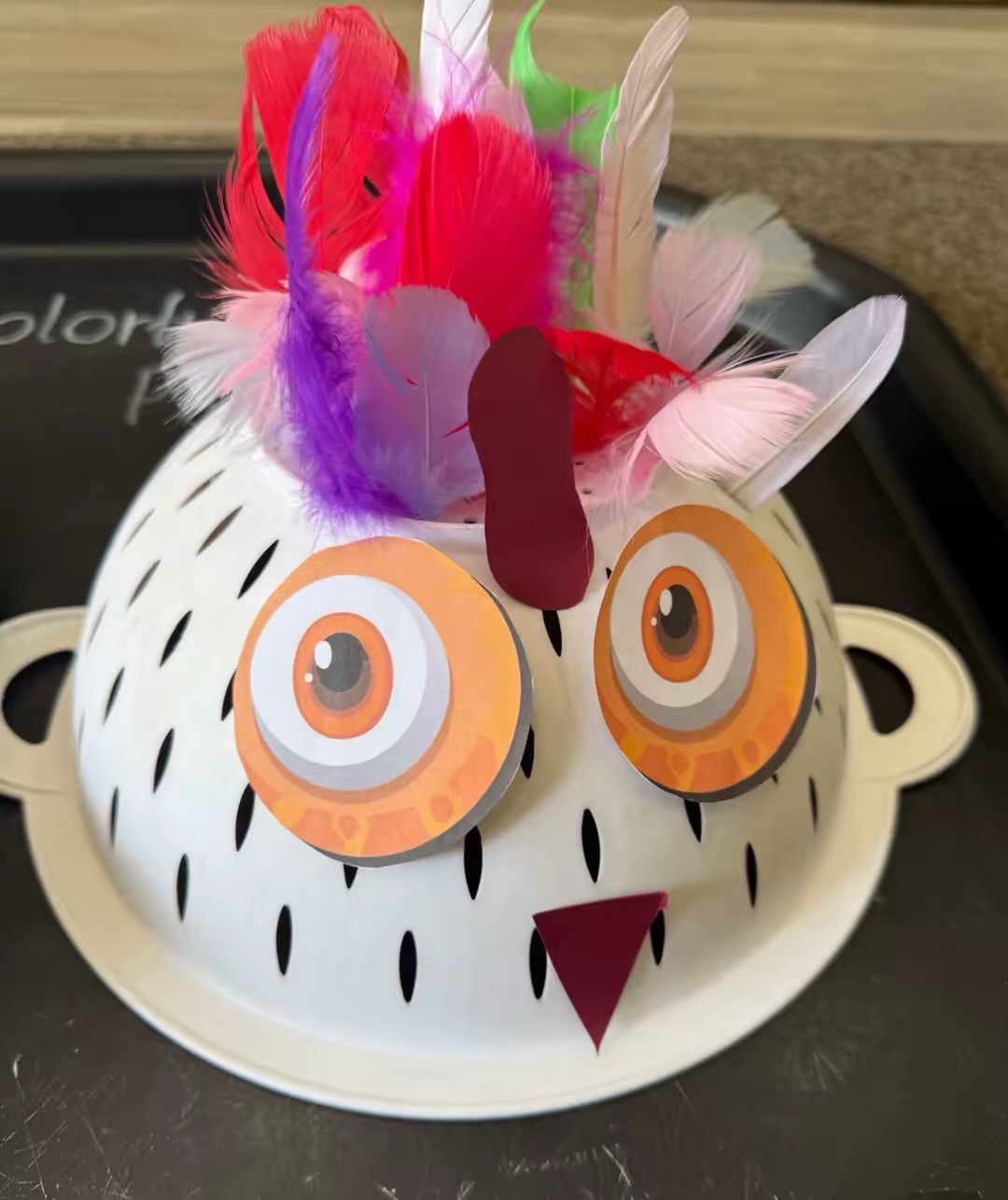
🪶 Create a Bird with Feathers

This simple invitation transforms a plastic strainer into a playful bird using printed eyes and a paper beak. Children use colorful feathers to decorate their bird by placing them through the holes in the strainer. As they carefully insert each feather, they strengthen fine motor skills, hand-eye coordination, and finger dexterity while expressing their creativity.

This open-ended activity encourages children to experiment with colors, textures, and patterns while creating their own unique feathered friend.


🏡 Build a Home for the Birds

Children use blocks and loose parts to design homes for birds. This open-ended STEM invitation encourages problem-solving, collaboration, creativity, and early engineering skills through play.


🐦 Help the Bird Find Its Nest

Can you help the bird return safely to its nest? In this hands-on invitation, children use a variety of toy vehicles to transport the bird and its eggs along the road and back to the nest. As they carefully move the birds, they explore different ways to solve the challenge while engaging in imaginative play.

This activity supports fine motor development, hand-eye coordination, problem-solving, and early STEM thinking as children decide which vehicle to use and how to transport the bird and eggs safely. It also encourages language development through conversations about bird habitats, nests, families, and caring for living things.

Children can repeat the activity in different ways, making each journey a new adventure while building confidence through play.


🌿 Final Thoughts

I hope these bird-themed activities inspire you to create meaningful learning experiences for your little learners. Simple invitations can spark curiosity, creativity, and a love for nature while making learning fun.

Thank you for stopping by Little Hands Learning. Be sure to check back soon for more hands-on activity ideas and classroom inspiration. Happy learning! 💛

7 Bug-Themed Activities for Toddlers & Preschoolers That Encourage Learning Through Play

Introduction

If you’re looking for engaging bug-themed activities that children will genuinely enjoy, these seven invitations to play are a great place to start.

As an Early Childhood Educator, I created and used each of these activities with children between 12 months and Pre-K. They encouraged curiosity, sensory exploration, movement, creativity, language development, and imaginative play while keeping learning fun.

Whether you’re planning an insect theme for your classroom or looking for simple ideas to try at home, these activities require minimal preparation while offering meaningful learning opportunities.

1. Bug Painting Invitation

Materials

  • Washable paint (different colours)
  • Plastic insects
  • White paper
  • Small paint trays
  • Plate or container for insects

How to Set Up

Pour different paint colours into small trays and place plastic insects in the centre. Invite children to dip the bugs into paint and stamp or drag them across the paper to create colourful bug prints and unique patterns.

Learning Benefits

  • Fine motor development
  • Creativity and self-expression
  • Colour exploration
  • Hand-eye coordination
  • Sensory exploration

Age: 12 months–Pre-K


2. Frozen Bug Ice Rescue

Materials

  • Plastic insects
  • Water
  • Containers for freezing
  • Large sensory bin
  • Warm water
  • Wooden spoons
  • Metal spoons
  • Scoops

How to Set Up

Freeze plastic insects inside blocks of ice. Place the frozen bugs into a sensory bin with warm water and provide different tools for children to rescue them.

Children naturally experiment with melting the ice while discovering different insects hidden inside.

Learning Benefits

  • Problem-solving
  • Cause and effect
  • Sensory exploration
  • Fine motor skills
  • Scientific thinking

Age: 18 months–Pre-K


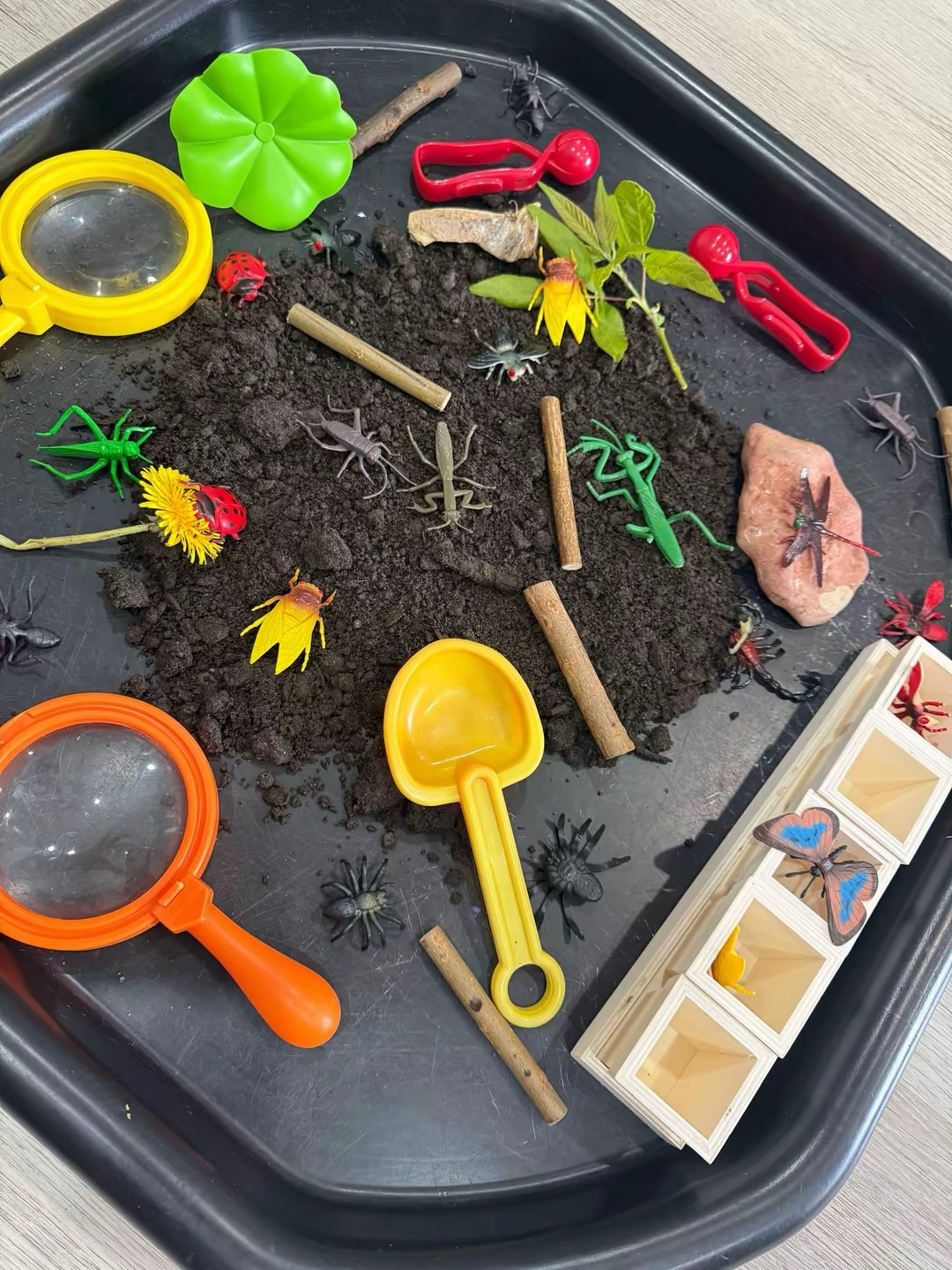
3. Nature Bug Sensory Tray

Materials

  • Real mud
  • Oats (used to create one section of textured mud)
  • Real leaves
  • Small branches
  • Rocks
  • Wooden slices
  • Plastic insects
  • Scoops
  • Bowls
  • Trowel

How to Set Up

Create a nature-inspired bug habitat using real natural materials. Arrange the insects throughout the tray and invite children to dig, scoop, search, and create their own bug adventures.

The combination of mud, oats, leaves, sticks, and insects provides a rich sensory experience while encouraging imaginative play.

Learning Benefits

  • Imaginative play
  • Fine motor development
  • Nature exploration
  • Language development
  • Sensory learning

Age: 12 months–Pre-K


4. Buzzing Bees Invitation

Materials

  • Yellow balloons
  • White paper wings
  • Black marker
  • String
  • Bee buzzing sound

How to Set Up

Turn yellow balloons into friendly bees by drawing simple faces and stripes with a black marker and attaching paper wings. Hang some from the ceiling while leaving others on the floor.

Play buzzing bee sounds and encourage children to chase, tap, reach, jump, and move as the balloons float and sway.

This activity became one of my children’s favourites because it combined movement with imaginative play.

Learning Benefits

  • Gross motor skills
  • Balance and coordination
  • Listening skills
  • Physical activity
  • Imaginative play

Age: 12 months–Pre-K


5. Bug Hunt Exploration

Materials

  • Plastic bugs
  • Stepping stones
  • Green leaf net on the climber
  • Natural classroom environment

How to Set Up

Hide bugs around the play area, including on the climber and around the stepping stones. Encourage children to search for each bug while climbing, balancing, and exploring.

This activity combines movement with observation skills and keeps children engaged as they hunt for hidden insects.

Learning Benefits

  • Gross motor development
  • Balance
  • Coordination
  • Observation skills
  • Problem-solving

Age: 12 months–Pre-K


6. The Very Hungry Caterpillar Story Basket

Materials

  • The Very Hungry Caterpillar book
  • Story props matching the book
  • Caterpillar and butterfly figures
  • Basket or tray

How to Set Up

Place the storybook alongside the matching props so children can explore the story through hands-on play. Invite them to retell the story, identify characters, and interact with the materials while reading together.

Learning Benefits

  • Early literacy
  • Vocabulary development
  • Story sequencing
  • Imagination
  • Communication skills

Age: 12 months–Pre-K


7. Bug Habitat Small World Sensory Tray

Materials

  • Plastic insects
  • Natural loose parts
  • Leaves
  • Branches
  • Flowers
  • Rocks
  • Mud/Dirt
  • Small containers
  • Magnifying glass
  • Scoops
  • Sensory tray

How to Set Up

Arrange natural materials to create different spaces where bugs can hide, climb, and explore. Children can invent stories, move insects through the habitat, and create their own miniature bug world.

Learning Benefits

  • Imaginative play
  • Creativity
  • Language development
  • Fine motor skills
  • Nature exploration

Age: 12 months–Pre-K


Why Bug-Themed Activities Matter

Bug-themed play offers far more than entertainment. It encourages children to observe the natural world, ask questions, solve problems, and develop important motor, language, and social skills through hands-on experiences.

Simple invitations like these allow children to learn at their own pace while building confidence through exploration and play.


Frequently Asked Questions

What age are these bug activities suitable for?

These activities were created for children aged 12 months through Pre-K, with adult supervision and age-appropriate materials.

Can I use real insects?

No. Plastic insects are a safer and more practical option for classroom and home learning.

Are these activities messy?

Some activities involve mud, paint, or water. Using a sensory tray or completing them outdoors can help make cleanup easier.

Which activity was the children’s favourite?

The Buzzing Bees Invitation and Frozen Bug Ice Rescue consistently kept children engaged through movement, exploration, and imaginative play.


Final Thoughts

Some of the best learning experiences come from simple materials, open-ended play, and a little imagination. These bug-themed invitations encouraged children in my classroom to explore, create, move, and discover in meaningful ways. I hope they inspire you to create memorable learning experiences with the little learners in your care.

🐞 Keep the Learning Going

If you enjoyed these bug-themed activities, there’s plenty more to explore on Little Hands Learning! My goal is to share simple, engaging, and classroom-tested play ideas that support children’s learning through creativity, exploration, and fun.

You might also enjoy:

  • 🌊 Ocean Sensory Play Invitation
  • 🧩 More sensory play ideas for infants, toddlers, and preschoolers
  • 🐦 Bird-themed activities (coming soon)

📌 Save this post for your next bug theme and share it with fellow educators, childcare providers, or parents looking for hands-on learning ideas.

Thank you for visiting Little Hands Learning. I hope these activities inspire many joyful moments of play and discovery with your little learners!

The Hard Years That Made Me Stronger

What’s a chapter of your life you’d title “The Hard Years” — and what got you through it?

There was a chapter in my life I’d call “The Hard Years.” It was filled with uncertainty, homesickness, financial stress, and the challenge of building a new life in a new country. There were times when I questioned whether everything I was working toward would ever come together.

What got me through was taking one step at a time. I focused on my goals, kept learning, worked hard, and reminded myself why I started. The support of my family and the hope of creating a better future gave me strength, even on the difficult days.

Looking back, those years taught me resilience, patience, and gratitude. They shaped who I am today and made me appreciate every achievement, no matter how small. Sometimes our hardest chapters become the foundation for our strongest selves.

DIY Sensory Bottles for Babies and Toddlers: Easy Ideas, Benefits, Objectives & Safety Tips

Introduction

Sensory bottles are a fun, engaging, and affordable way to encourage babies and toddlers to explore the world around them. They provide children with opportunities to discover colours, movement, textures, and sounds while supporting important developmental skills through hands-on play.

Whether you’re a parent, caregiver, or early childhood educator, sensory bottles are easy to make and can be adapted to match any learning theme, season, or holiday. In this post, I’ll share creative sensory bottle ideas, learning objectives, developmental benefits, supplies you’ll need, and important safety tips.


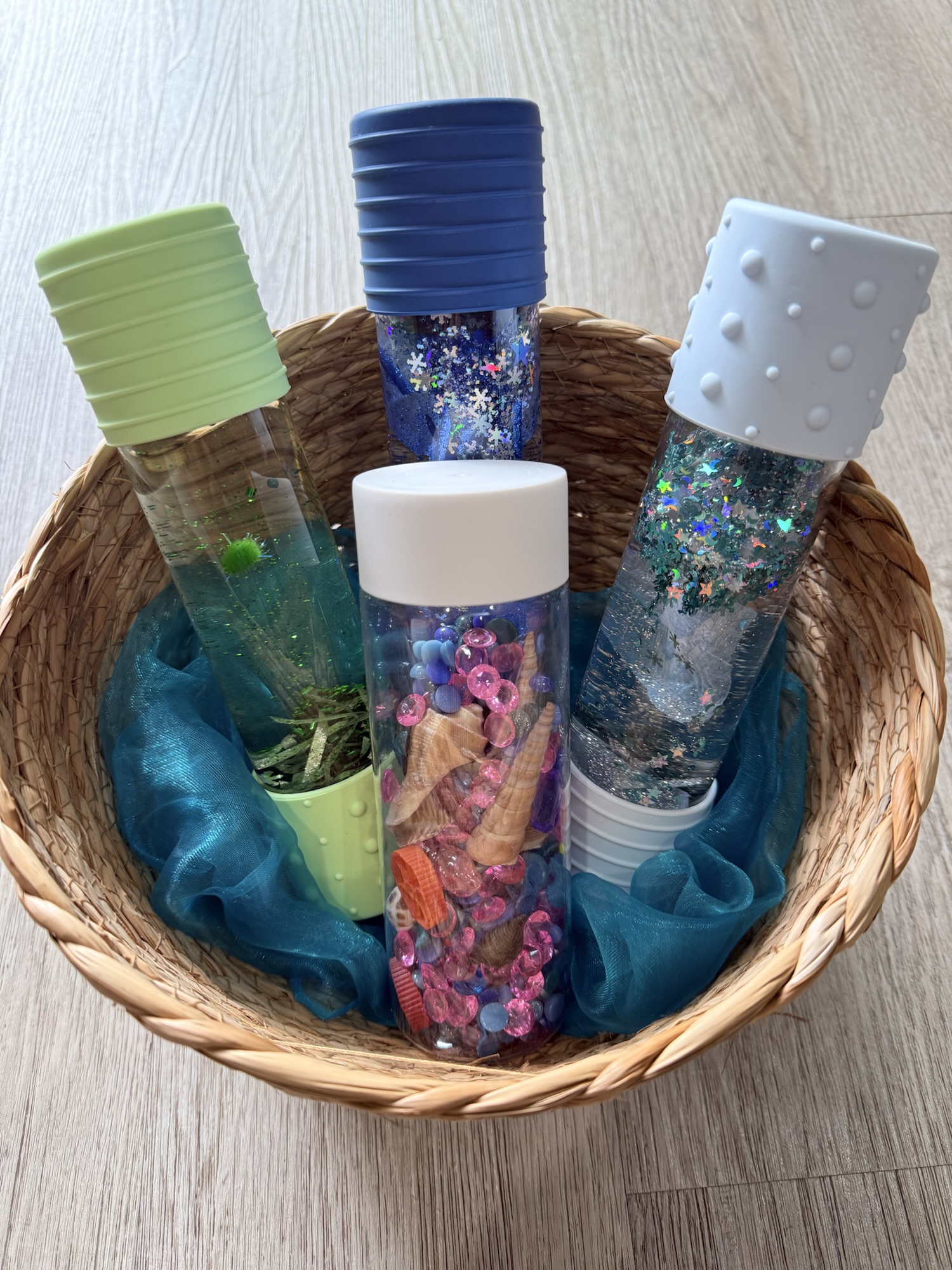
A collection of colourful sensory bottles created using a variety of simple materials. Each bottle offers a unique sensory experience and can be adapted to suit different learning themes and children’s interests.

🌟 Learning Objectives

  • Develop visual tracking skills.
  • Strengthen fine motor skills through grasping and shaking.
  • Explore colours, textures, and movement.
  • Learn about cause and effect.
  • Build concentration and attention.
  • Encourage curiosity and exploration.
  • Support language development through conversations.
  • Promote self-regulation with calming sensory experiences.
  • Encourage independent play.

🌈 Developmental Benefits

Sensory bottles support many areas of development, including:

  • 🧠 Cognitive Development
  • 🤲 Fine Motor Skills
  • 👀 Visual Tracking
  • 💬 Language Development
  • ❤️ Social-Emotional Development
  • 🌟 Sensory Exploration

Sensory bottles encourage children to observe, investigate, and explore different materials while supporting early learning through play.

🛒 Materials You Can Use

One of the best things about sensory bottles is that you can create them using inexpensive or recycled materials. Some popular fillers include:

  • Glitter
  • Sequins
  • Pom-poms
  • Buttons
  • Colourful beads
  • Foam beads
  • Small rocks or pebbles
  • Clean beach sand or craft sand
  • Seashells
  • Rice
  • Pasta
  • Dried beans or lentils
  • Feathers
  • Gems
  • Small plastic animals
  • Mini dinosaurs
  • Ocean-themed figures
  • Water
  • Food colouring
  • Clear glue or glycerin (to slow the movement)

You can mix and match materials to create unique sensory bottles that fit your learning theme.

♻️ Choosing the Right Bottle

You don’t need to buy special sensory bottles. You can reuse clean, clear plastic bottles from around your home, including:

  • Water bottles
  • Soft drink bottles
  • Juice bottles
  • Smoothie bottles
  • Other clear plastic bottles with secure lids

Recycling bottles is an affordable and environmentally friendly way to create sensory play experiences.

🛍️ Where to Buy Supplies

Most sensory bottle materials are inexpensive and easy to find. You can purchase supplies from:

  • Dollar Tree
  • Dollarama
  • Amazon
  • SHEIN
  • Temu
  • AliExpress
  • Local craft stores

Choose materials that match your learning theme, such as oceans, nature, transportation, construction, dinosaurs, colours, seasons, or holidays. There are endless possibilities, so have fun getting creative!

💡 Tips for Creating Sensory Bottles

  • Choose a clear bottle so children can easily see the contents.
  • Don’t overfill the bottle; leave space for the materials to move.
  • Experiment with different colours, textures, and fillers.
  • Match your sensory bottle to your classroom theme or your child’s interests.
  • Make sure the lid is tightly sealed before use.

🔒 Safety Tips

  • Always supervise children while using sensory bottles.
  • Secure the lid with strong glue or another child-safe sealant.
  • Regularly check bottles for leaks or cracks.
  • Use age-appropriate materials.
  • Replace damaged bottles immediately

Every sensory bottle is unique. Use your imagination, recycle everyday bottles, and choose materials that inspire children to explore, discover, and learn through play.

💙 Final Thoughts

Sensory bottles are a simple, affordable, and engaging way to support early childhood learning through play. They encourage curiosity, creativity, and exploration while helping children develop important cognitive, physical, language, and social-emotional skills. Whether you create them using recycled bottles or store-bought containers, sensory bottles can be adapted to suit any theme and provide meaningful learning opportunities for babies and toddlers.

🌊 Clean the Ocean Sensory Play: A Fun Ocean Rescue Activity for Toddlers & Preschoolers

Looking for an engaging ocean-themed sensory activity that also teaches children about caring for the environment? This Clean the Ocean Sensory Play invitation combines hands-on exploration, imaginative play, and environmental awareness in one exciting setup that children absolutely love.

Whether you’re a parent, preschool teacher, or early childhood educator, this simple activity encourages little learners to become “Ocean Helpers” as they rescue sea animals and remove litter from the water.

🌊 Why Children Love This Activity

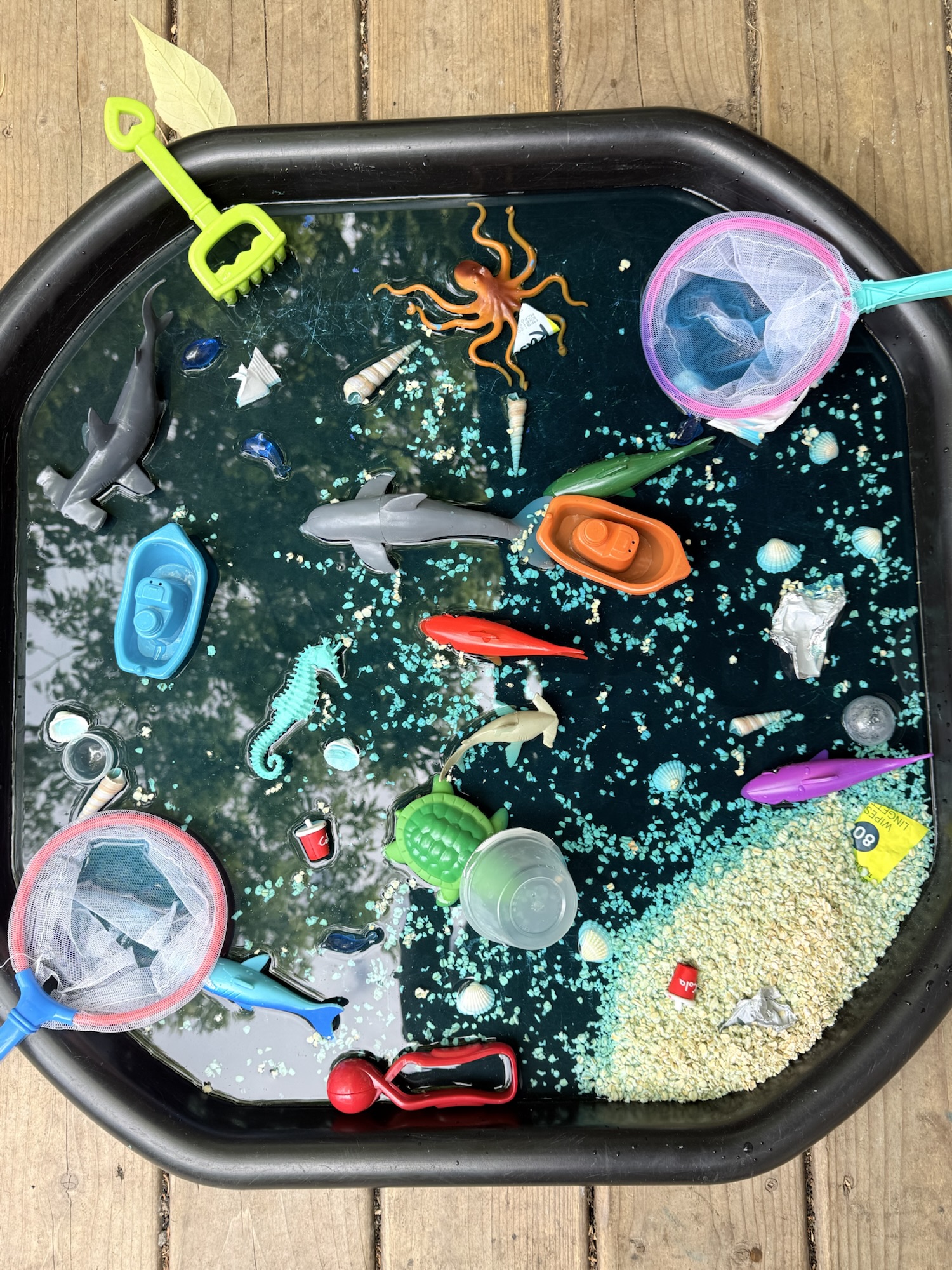
There’s something magical about water play! Children are naturally drawn to scooping, splashing, and exploring. Adding ocean animals, tiny boats, shells, and hidden pieces of litter transforms a simple water tray into an exciting ocean rescue mission.

Instead of simply playing with water, children become environmental heroes, protecting marine life while developing important early learning skills.

🐢 Materials You’ll Need

  • Large sensory tray or water table
  • Water
  • Blue food colouring or liquid watercolour
  • Ocean animal figurines (sharks, dolphins, turtles, fish, octopus, seahorse)
  • Toy boats
  • Seashells
  • Fine-mesh nets
  • Scoops and small containers
  • Oats (to create a sandy shoreline)
  • Clean recyclable items (paper, foil, bottle caps, wrappers, small cups)
  • Small garbage bin or container

🌊 How to Set Up

Fill the tray with blue-coloured water to create the ocean.

Create a small beach using oats along one side of the tray. Scatter shells across the water and beach before placing the ocean animals throughout the tray.

Finally, add a few clean recyclable “garbage” items into the water and place a small garbage bin nearby.

Invite children to rescue the ocean by using nets to collect the litter before placing it into the garbage bin.


🌎 Learning Through Play

This invitation encourages children to:

✔ Develop fine motor skills through scooping and grasping

✔ Strengthen hand-eye coordination

✔ Explore different textures and materials

✔ Build vocabulary about ocean animals and habitats

✔ Learn early environmental responsibility

✔ Develop problem-solving skills

✔ Use imagination and storytelling during play


💬 Questions to Extend Learning

Try asking open-ended questions like:

  • Which sea animal did you rescue first?
  • Can you find all the garbage hiding in the ocean?
  • How do you think the turtle feels when the ocean is clean?
  • Where should the litter go?
  • What can we do to help keep our oceans clean every day?

These simple conversations help children connect play with real-world environmental care.


🌟 Why Environmental Play Matters

Children learn best through meaningful experiences. Activities like this introduce important concepts such as caring for nature, protecting wildlife, and cleaning up after ourselves in a way that’s fun, memorable, and age-appropriate.

Small lessons today help build lifelong habits tomorrow.


⚠️ Safety Reminder

Always supervise children during water play. Ensure all materials are age-appropriate, especially for younger toddlers who may still mouth objects.


💙 Final Thoughts

This Clean the Ocean Sensory Play invitation is one of our favourite ocean-themed activities because it combines sensory exploration, imaginative play, fine motor development, and environmental education in one simple setup.

Children don’t just play—they become little ocean protectors, discovering that even small actions can make a big difference.

How would your little learners rescue the ocean? We’d love to hear your ideas in the comments! 🌊🐢

Bird Rescue & Car Wash Sensory Play for Summer

Summer is the perfect time for water play! This Bird Rescue & Car Wash Sensory Play is an easy, engaging activity that combines washing toy vehicles with rescuing little birds from bubbly water. Children love exploring, scrubbing, and splashing while building important early learning skills through hands-on play.

This activity is perfect for toddlers, preschoolers, daycare classrooms, home daycares, or family fun at home.

Materials

  • Large plastic sensory bin
  • Warm water
  • Tear-free soap or bubble bath
  • Toy cars and trucks
  • Small toy birds
  • Plastic eggs (optional)
  • Children’s toothbrushes
  • Small towel for drying
  • Plastic scoops or cups (optional)

How to Set Up

  1. Fill a large plastic bin with warm water.
  2. Add a small amount of tear-free soap to create bubbles.
  3. Place the toy cars, birds, and plastic eggs into the bin.
  4. Put toothbrushes beside the bin so children can scrub the toys.
  5. Place a towel nearby for drying.
  6. Invite children to rescue the birds, wash the cars, and enjoy open-ended exploration.

Learning Benefits

Children develop many important skills while playing:

  • Fine motor skills
  • Hand-eye coordination
  • Sensory exploration
  • Imaginative play
  • Language development
  • Problem-solving
  • Cause-and-effect understanding
  • Social interaction when playing together

Why Open-Ended Play Matters

This activity has no right or wrong way to play. Children can create their own ideas, rescue birds, wash vehicles, and invent stories while exploring the materials. Open-ended play encourages creativity, independence, confidence, and curiosity.


Safety Tips

  • Always supervise children during water play.
  • Use only a shallow amount of water.
  • Choose non-toxic, washable toys.
  • Dry the floor after play to prevent slipping.

Perfect For

  • Summer activities
  • Sensory play
  • Water play
  • Toddler activities
  • Preschool activities
  • Daycare invitations to play
  • Home daycare
  • Early childhood education

Frequently Asked Questions

What age is this activity suitable for?

This activity is ideal for toddlers and preschoolers (approximately 18 months to 5 years) with adult supervision.

Can I do this indoors?

Yes! Place towels or a waterproof mat underneath the bin to catch any spills.

Can I use different toys?

Absolutely. You can replace the birds with sea animals, dinosaurs, farm animals, or any washable toys your child enjoys.


Final Thoughts

Bird Rescue & Car Wash Sensory Play is a simple, low-prep activity that encourages creativity, sensory exploration, and hands-on learning. Whether you’re a parent or educator, this playful invitation is a wonderful way to keep children engaged while supporting their development.

Ocean Finger Painting: A Fun Process Art Activity for Infants and Toddlers

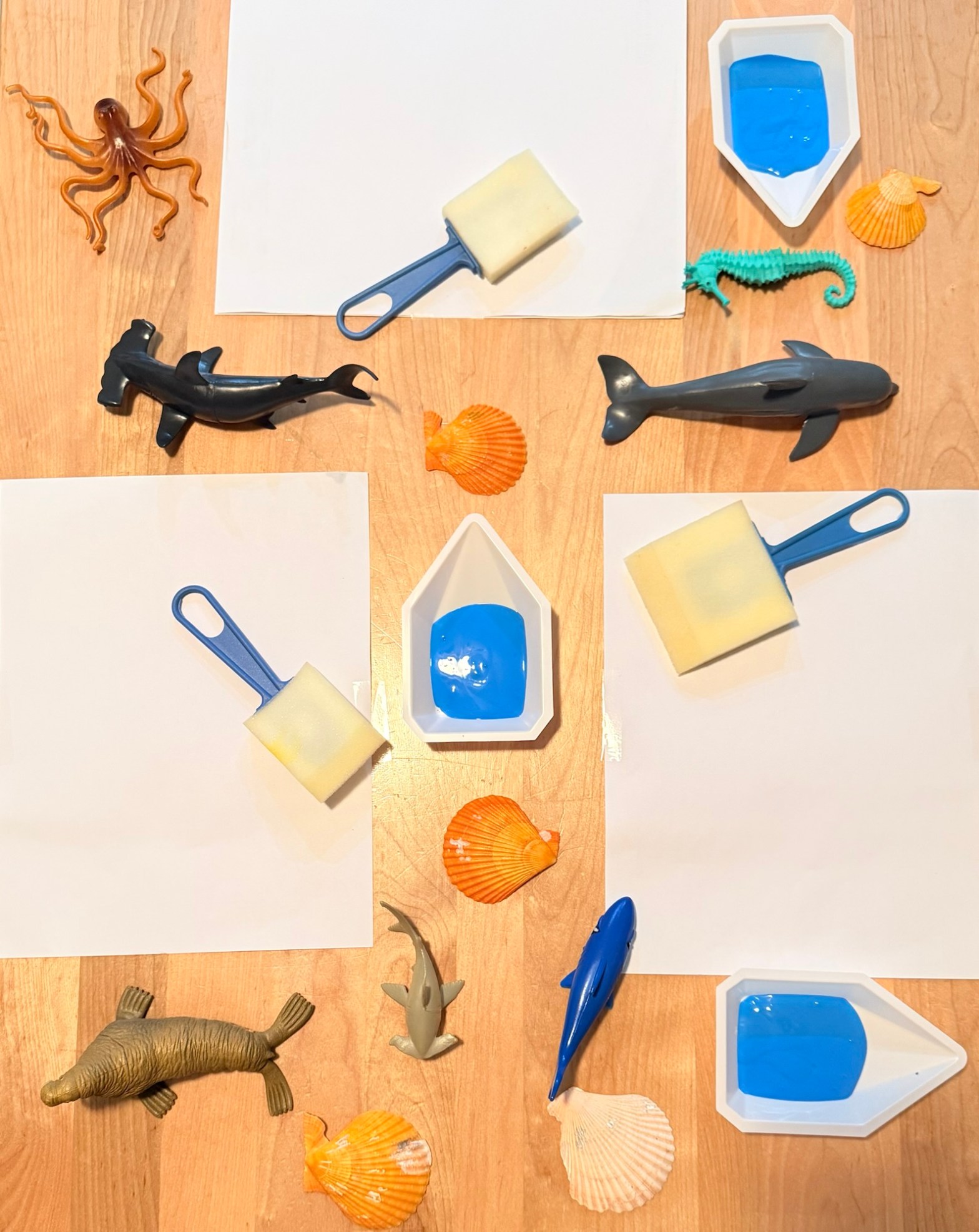
Ocean-themed activities are a wonderful way to introduce young children to marine life while encouraging creativity. This Ocean Finger Painting invitation is a simple, open-ended art experience that allows infants and toddlers to freely explore paint, colors, and textures without focusing on creating a perfect picture.

What You’ll Need

  • White paper
  • Washable blue paint
  • Sponge brushes (optional)
  • Ocean animal toys
  • Seashells
  • Paint trays or small containers
  • Aprons or smocks

How to Set Up the Activity

Arrange white paper on a table with blue washable paint in small trays. Add ocean animal figures and seashells around the painting area to spark children’s curiosity and encourage conversations about life under the sea.

Invite children to explore the materials at their own pace. Some may choose to use the sponge brush, while others may enjoy painting with their fingers and hands.

Why This Is Process Art

Process art focuses on the experience of creating rather than the final product. Every child creates something unique while exploring paint, movement, and color.

There are no right or wrong ways to paint, allowing children to express themselves freely and build confidence through creativity.

Learning Benefits

This activity supports many areas of development, including:

  • Fine motor development
  • Hand-eye coordination
  • Sensory exploration
  • Creativity and imagination
  • Color recognition
  • Language development through conversations about ocean animals
  • Independence and confidence
  • Self-expression

Open-Ended Learning

Open-ended art encourages children to make their own choices throughout the activity. They decide how to move the paint, where to place it, and how long they want to explore.

Each piece of artwork becomes a unique reflection of the child’s own ideas and creativity.

Tips for Success

  • Use non-toxic, washable paint.
  • Cover the table for easy cleanup.
  • Dress children in painting smocks.
  • Allow plenty of time for exploration.
  • Talk about the sea animals as children paint to introduce new vocabulary.

Perfect For

  • Infant classrooms
  • Toddler classrooms
  • Preschool
  • Daycare programs
  • Homeschool
  • Ocean theme units
  • Summer activities

Frequently Asked Questions

What age is this activity suitable for?

This activity is ideal for children aged 12 months to 3 years, with close adult supervision.

Is finger painting messy?

Yes—but that’s part of the learning! Using washable paint and protecting the workspace makes cleanup quick and easy.

Why choose process art?

Process art encourages creativity, exploration, and confidence by focusing on the creative journey rather than producing a specific craft.

Final Thoughts

Ocean Finger Painting is an engaging way for young children to explore art while learning about the ocean. Whether they use their fingers, hands, or a sponge brush, every child enjoys a unique creative experience that supports important developmental skills through play.

How to Create an Ocean Sensory Play Invitation

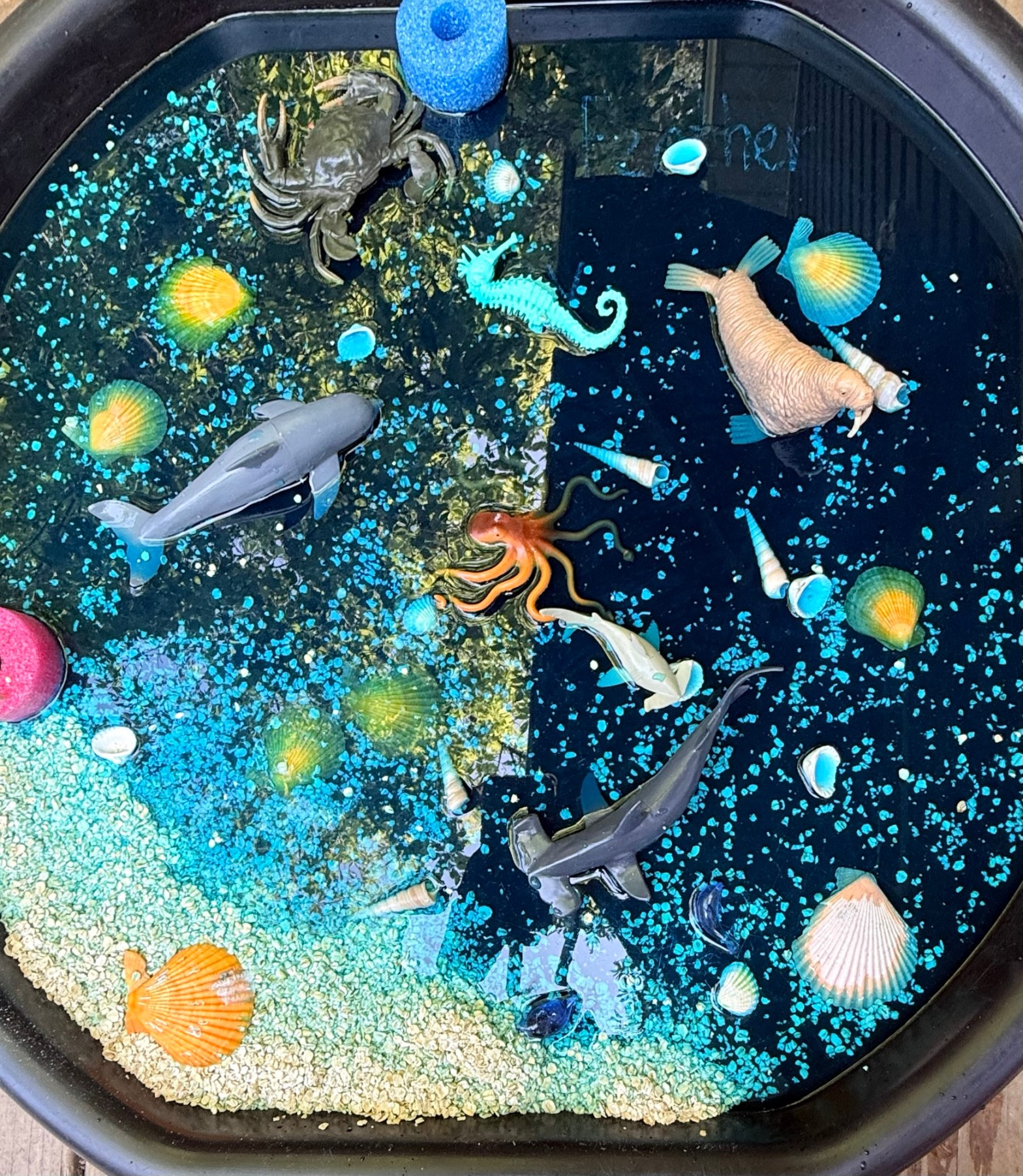
Looking for a simple ocean-themed sensory activity? This ocean sensory play invitation is quick to set up using everyday materials and encourages children to explore, imagine, scoop, pour, and discover through hands-on play.

Materials

  • Tuff tray or sensory bin
  • Water
  • Blue food colouring
  • Oats (to create sand)
  • Sea animal figurines
  • Shells
  • Scoops and small cups

How to Set It Up

  1. Fill the tuff tray with water.
  2. Add a few drops of blue food colouring and mix well.
  3. Place oats on one side to create a sandy beach.
  4. Add sea animals, shells, scoops, and cups.
  5. Invite children to explore, scoop, pour, and create their own ocean adventures.

Why Children Love It

This activity encourages sensory exploration, imaginative play, hand-eye coordination, and early language development while having fun.

Tip: Always supervise children during sensory play and adapt materials to suit their age and developmental stage.

Is this your new site? Log in to activate admin features and dismiss this message
Log In